

To open a butcher shop in the UK you need refrigeration (a display counter and cold storage), cutting machinery (a meat bandsaw and a mincer), work surfaces (a butcher block or polytop table), quality knives and a sharpening steel, weighing and packaging kit, plus food-safe workwear and PPE. On top of the equipment you must register the premises as a food business with your local council at least 28 days before opening. Budget roughly £20,000 to £80,000 to fit out a shop, depending on whether you buy new or used and how much machinery you need. This guide walks through every category, with realistic costs and a printable checklist at the end.
In this guide
- How much does it cost to open a butcher shop in the UK?
- What licences and registrations do you need?
- Refrigeration and display
- Cutting machinery: bandsaws and mincers
- Work surfaces, blocks and tables
- Knives, sharpening and hand tools
- Spares and consumables
- Workwear, PPE and hygiene
- Packaging and presentation
- The complete butcher shop equipment checklist
- Frequently asked questions
How much does it cost to open a butcher shop in the UK?
Expect a realistic startup budget of £20,000 to £80,000 to equip an independent butcher shop, before rent and stock. The single biggest variable is machinery: a new floor-standing bandsaw and a commercial mincer can account for half your fit-out on their own, while buying refurbished or starting with table-top models brings the figure down sharply. The table below gives typical price ranges by category to help you plan.
| Category | Typical cost (new) | Priority |
|---|---|---|
| Refrigerated display counter | £2,500 to £8,000 | Essential |
| Cold room or commercial fridges | £3,000 to £12,000 | Essential |
| Meat bandsaw | £3,000 to £13,000 | Essential |
| Meat mincer | £1,400 to £3,000 | Essential |
| Butcher block or polytop table | £150 to £1,800 | Essential |
| Knives, steels and small tools | £200 to £600 | Essential |
| Scales and packaging | £500 to £2,500 | Essential |
| Workwear, PPE and consumables | £300 to £1,000 | Essential |
| Vacuum packer (optional at first) | £2,000 to £7,000 | Nice to have |
A practical way to control costs is to split your list into "open the doors" essentials and "add as you grow" extras. Refrigeration, one bandsaw, one mincer, a cutting surface, knives and scales get you trading. A vacuum packer, sausage filler and second mincer can follow once the cash is coming in.
What licences and registrations do you need?
You do not need a special butcher's "licence" to trade in the UK, but you must register as a food business with your local authority at least 28 days before you start selling. Registration is free and cannot be refused. Alongside it you are legally required to:
- Follow a documented food safety management system based on HACCP principles (the Food Standards Agency "Safer Food, Better Business" pack is the usual starting point).
- Make sure staff handling meat have appropriate food hygiene training (Level 2 Food Safety is standard).
- Meet waste, drainage and handwashing requirements, including separate sinks for handwashing and for cleaning equipment.
- Display correct labelling and allergen information on prepared products.
Your premises will be inspected and given a Food Hygiene Rating. Getting the layout, refrigeration and cleaning regime right from day one is what protects that score. For the official rules, see the Food Standards Agency guidance on registering a food business.
What refrigeration and display equipment does a butcher shop need?
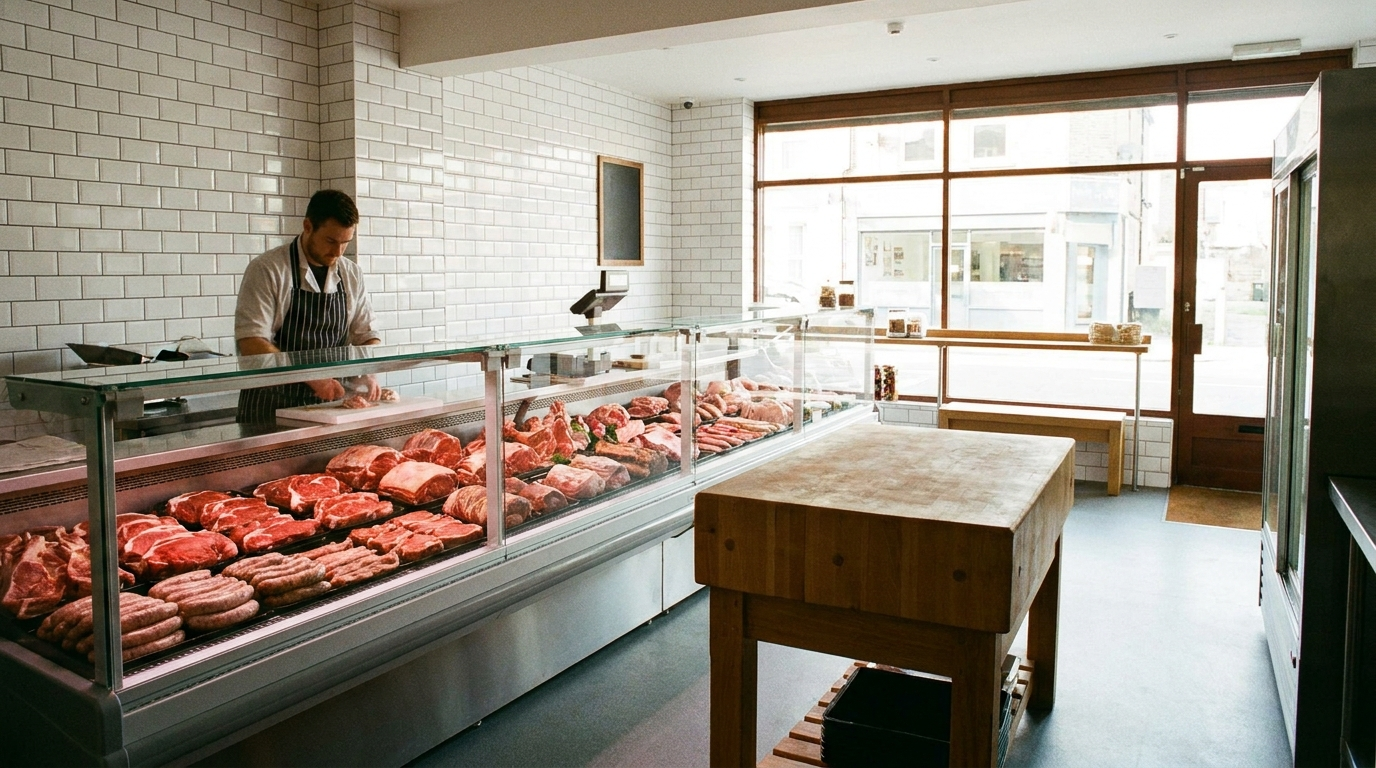
Refrigeration is non-negotiable and usually the first thing customers judge you on. You need two things: a serve-over refrigerated display counter for the shop floor, kept between 1°C and 4°C, and cold storage behind it, either a walk-in cold room or a bank of commercial fridges and a freezer. Size the display to your range, not your ambitions: a counter that always looks half empty sells less than a smaller one that looks full.
Practical points that catch new owners out: allow for the heat that bandsaws and lighting throw into a small shop, leave room behind the counter to work, and keep raw and ready-to-eat products properly separated. A reliable digital thermometer and a daily temperature log are part of your hygiene paperwork, not optional extras.
Which machinery is essential for a butcher shop?
Two machines do the heavy lifting in almost every butcher shop: a meat bandsaw for cutting bone-in joints, chops and steaks, and a meat mincer for mince, burgers and sausage mix. If you only buy two pieces of machinery to open, buy these.
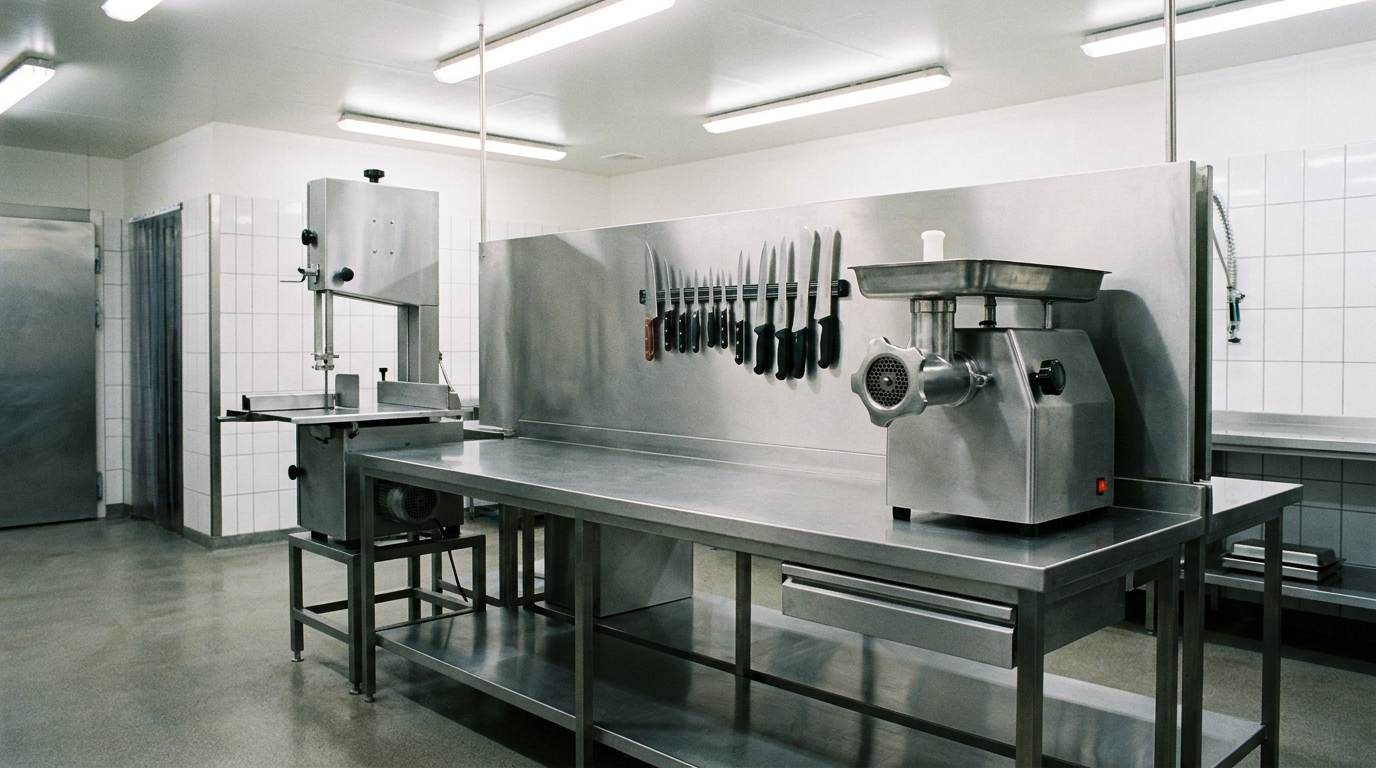
For a new independent, a table-top bandsaw is often the right starting point: it has a smaller footprint, a lower price and is easier to clean than a floor-standing model, while still handling everyday joints. Step up to a floor-standing saw only when volume demands it.

A versatile, reliable table-top saw that suits most independent shops, available in 1 phase and 3 phase.
For mincing, match the machine to the volume you expect. A No.32 head mincer is the workhorse size for most shops, fast enough for a busy Saturday without taking up a cold room. Look for a stainless body, a removable head for cleaning and a sensible reverse function.

A high-performance No.32 mincer built for the daily demands of a busy butchery, at a price that works for new shops.
As you grow you may add a vacuum packer to extend shelf life and sell online, a sausage filler, a burger press and a meat slicer for cooked meats. None are needed to open, so phase them in.
What work surfaces and cutting blocks do you need?
You need a dedicated, food-safe cutting surface. The two main choices are a traditional wooden butcher block and a modern HDPE polytop table. Wooden blocks are kind to knife edges and look the part on a shop floor. Polytop tables are non-porous, lighter, easy to wash down and tend to be cheaper, which is why many new shops start with them in the prep room and keep a wooden block out front.

A premium Italian Black Locust block, available with or without a stand. Prefer plastic? See our HDPE polytop tables from £144.
Add at least one stainless steel prep table for packing and weighing, and colour-coded boards if you handle different meat types, to keep your hygiene rating high.
What knives and sharpening tools does a butcher need?
A starter knife kit for one butcher is a boning knife, a steak or breaking knife, a cleaver and a honing steel, plus a safe way to store them. Buy professional knives with grippy, food-safe handles such as the Victorinox Fibrox range; they hold an edge, are easy to sanitise and are the standard in UK butcheries.
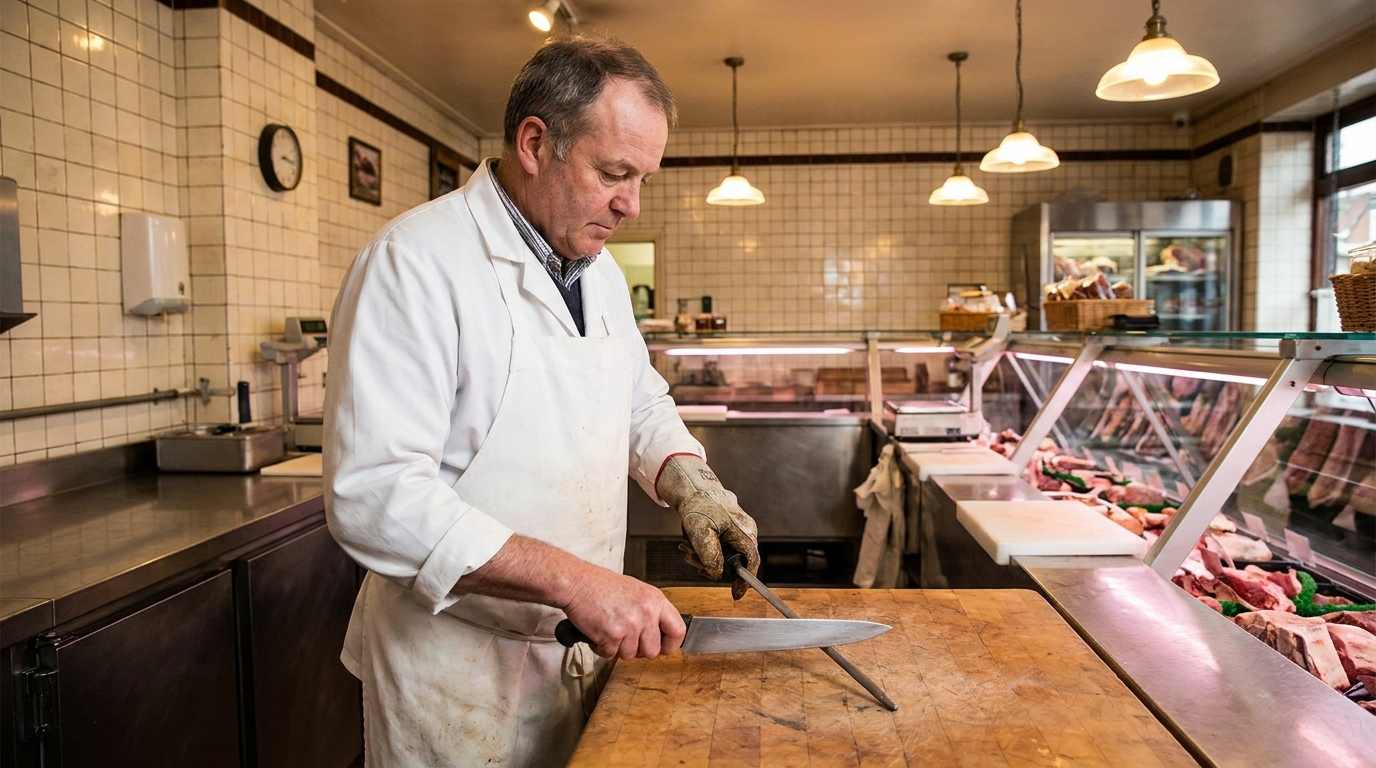
The honing steel is the tool people skip, and it is the one that matters most day to day. Steeling realigns the edge between sharpenings so your knives keep cutting cleanly, which is faster and safer than forcing a dull blade.

A professional Fibrox slicing knife in stainless steel. Pair it with a 6" boning knife (£12) for a complete starter set.

A professional honing steel that keeps your edges true through a full shift. Store blades safely on a magnetic knife rack (£27).
What spares and consumables should you stock?
Machinery is only as good as the parts that wear out. Keep spares on the shelf so a blunt plate or a snapped blade never stops you trading. The two you will reorder most are mincer plates and knives (matched to your mincer head size, commonly No.22 or No.32) and bandsaw blades in the right length for your saw. Mincer plates come in different hole sizes: a 4mm to 4.5mm plate suits everyday mince, while a finer 3mm gives a tighter texture for sausages and burgers.
Stock a few of each so you can swap a worn part mid-shift. Browse No.32 mincer plates from £26 and replacement bandsaw blades from £37.50 to set your par levels.
What workwear, PPE and hygiene supplies are required?
Food-safe workwear is both a hygiene requirement and a safety one. For each member of staff you need a white butcher's coat or jacket, an apron, suitable safety footwear such as wellingtons with a steel toecap, and gloves: disposable nitrile gloves for handling, and cut-resistant or chain mail gloves for boning and using the bandsaw.
The essentials to kit out a butcher:
- White cotton butcher's coat, from £18.
- Polycotton bib apron, from £7.29.
- Cut-resistant nitrile gloves, from £8.85.
- Steel toecap safety wellingtons, from around £19.
Back this up with cleaning chemicals, blue roll, sanitiser, a first aid kit and a clear cleaning schedule. These small recurring costs are what keep your Food Hygiene Rating where you want it.
What about scales, packaging and presentation?
To sell by weight you need approved retail scales, ideally a price-computing scale with a label printer so pricing is fast and accurate. For packaging, stock meat trays, food-grade wrapping film, paper and bags, plus labels that carry your name, weight, price and any allergen information.
Presentation sells: clean trays, tidy film and consistent labels make a counter look professional. A roll of quality food wrapping film (£35 for 1,500m) lasts a long time and keeps cut meat looking fresh in the display.
The complete butcher shop equipment checklist
Here is the full list in one place. Print it, tick off what you have, and prioritise the essentials first.
| Area | Equipment |
|---|---|
| Refrigeration | Serve-over display counter, cold room or commercial fridges, freezer, thermometer and temperature log |
| Machinery | Meat bandsaw, mincer; later: vacuum packer, sausage filler, burger press, slicer |
| Work surfaces | Butcher block or polytop table, stainless prep table, colour-coded boards |
| Knives and tools | Boning knife, steak knife, cleaver, honing steel, knife rack or sterile storage |
| Spares | Mincer plates and knives, spare bandsaw blades |
| Workwear and PPE | Coats, aprons, safety wellingtons, disposable and cut-resistant gloves |
| Scales and packaging | Price-computing scales, label printer, trays, wrapping film, bags, labels |
| Hygiene | Handwash and equipment sinks, cleaning chemicals, blue roll, sanitiser, first aid kit |
| Admin | Food business registration, HACCP plan, Level 2 food hygiene training, EPOS or till |
Kitting out a new butcher shop?
From bandsaws and mincers to knives, blocks, PPE and spares, M&S Butcher Equipment supplies everything on this checklist, with trade pricing and UK delivery.
Shop butcher equipment →Not sure what you need? Call our team for advice on building your shop fit-out.
Frequently asked questions
How much does it cost to open a butcher shop in the UK?
Budget roughly £20,000 to £80,000 to equip an independent butcher shop, before rent and stock. Machinery and refrigeration are the biggest costs. Buying refurbished equipment and starting with table-top machines can bring the figure toward the lower end.
Do you need a licence to be a butcher in the UK?
There is no specific butcher's licence, but you must register your premises as a food business with your local council at least 28 days before opening. You also need a HACCP-based food safety plan and staff trained to at least Level 2 Food Safety.
What machinery does a butcher shop need to start?
At a minimum, a meat bandsaw for bone-in cuts and a mincer for mince and sausage mix. A vacuum packer, sausage filler, burger press and slicer are useful additions you can buy once you are trading.
What size mincer do I need for a butcher shop?
A No.32 mincer is the most popular size for independent shops, balancing capacity and footprint. Smaller No.22 or No.12 mincers suit lower volumes. Match your mincer plates and knives to the head size you choose.
What is the best knife for a butcher?
A professional boning knife and a steak or breaking knife in stainless steel with a grippy, food-safe handle, such as the Victorinox Fibrox range, cover most tasks. Keep a honing steel close and steel the edge regularly.
How long does it take to set up a butcher shop?
Allow at least two to three months once you have premises, since food business registration needs 28 days' notice and machinery and refrigeration can have lead times. Sorting equipment and your hygiene paperwork early avoids delays to opening.
Prices correct at the time of writing and may change. Always check current product pages for the latest pricing and availability.


