



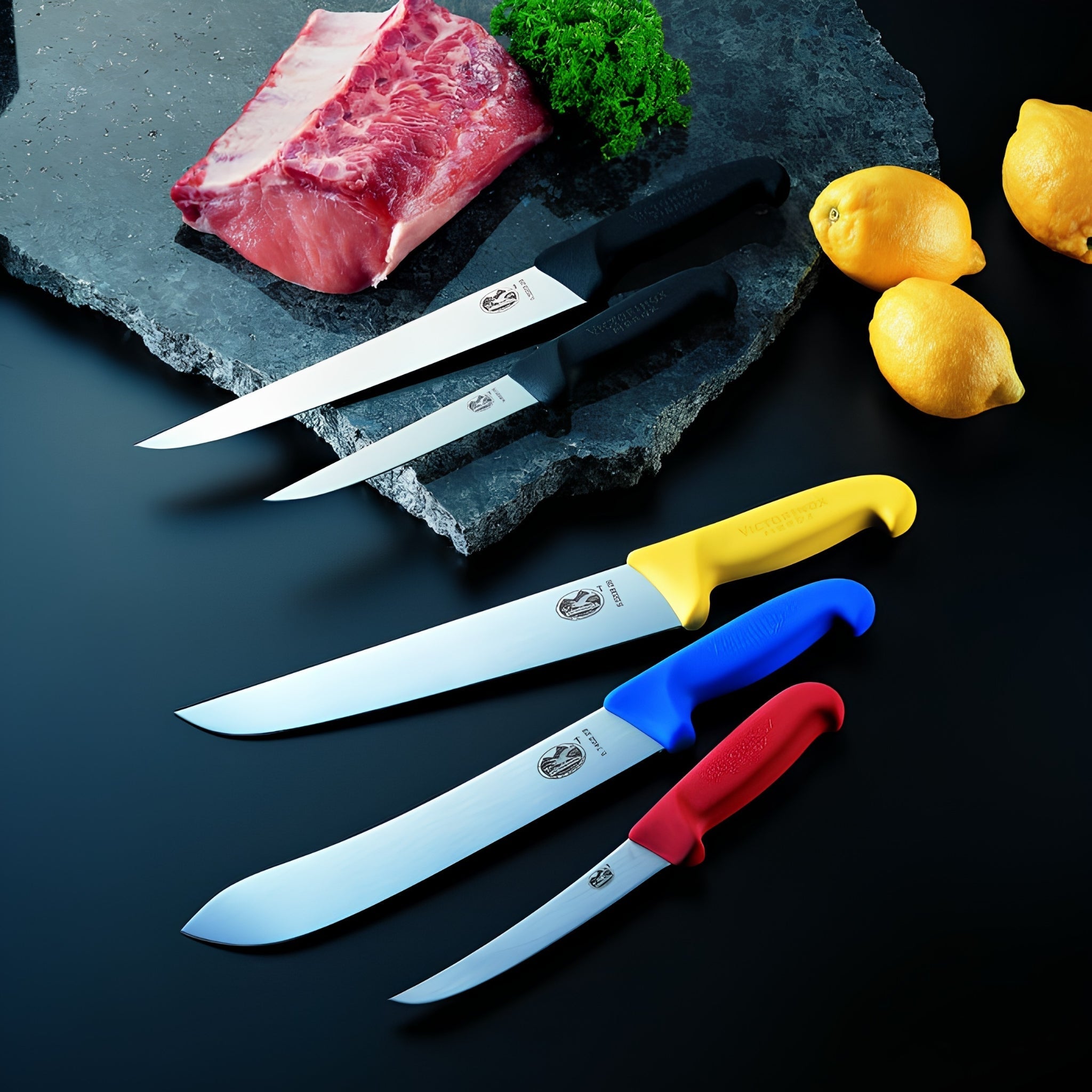
With over 30 years in the meat trade, we stock the knives butchers actually reach for: Victorinox, F. Dick, Eicker and more. Here is how to choose the right ones.
Shop all butcher knives →To choose the right butcher knife, start with the job: a boning knife for removing bones and trimming, a breaking or steak knife for portioning large cuts, a cimeter for slicing, and a cleaver for chopping through bone. Look for high-carbon stainless steel that holds an edge, the right blade flexibility for your work (stiffer for beef, more flexible for poultry and fish), and a grippy, food-safe handle such as the Victorinox Fibrox. A good butcher knife costs from around £12 to £45, and a honing steel to keep it sharp is the most important extra. This guide walks through each type and what to look for.
In this guide
- What types of butcher knife do I need?
- What blade steel and flexibility should I choose?
- What about the handle and grip?
- How do I keep a butcher knife sharp?
- How should I store and clean knives safely?
- Frequently asked questions
What types of butcher knife do I need?
Most butchers build a small kit of knives, each shaped for a job. You do not need all of them on day one, but a boning knife, a breaking or steak knife and a cleaver will cover the majority of tasks. The table below shows what each one is for.
| Knife | Best for |
|---|---|
| Boning knife | Removing bones and trimming; the blade follows the contours of bones and joints to cut waste |
| Breaking / steak knife | Breaking down and portioning large cuts and steaks with a long, sturdy blade |
| Cimeter (scimitar) | A long, curved blade for slicing and portioning large cuts and trimming fat |
| Filleting knife | A thin, flexible blade for fish and fine work |
| Cleaver | A heavy, square blade for chopping through bone and large pieces |

The everyday workhorse of the trade: a Swiss-made Fibrox boning knife trusted by butchers for trimming and removing bones.

A long, sturdy slicing and portioning knife for breaking down larger cuts and cutting steaks.

A robust, heavy cleaver for chopping through bone and breaking down large pieces with force.
What blade steel and flexibility should I choose?
Most professional butcher knives use high-carbon stainless steel, which holds a sharp edge well while resisting stains and corrosion in a wet, busy environment. You want steel that is hard enough to keep its edge but not so brittle that it chips when it meets the occasional bone.
Flexibility matters just as much as the metal. A stiffer blade gives you control and power for beef and larger cuts, while a more flexible blade follows bones and works better for poultry and fish. If you only buy one boning knife, a semi-flexible 5 inch to 6 inch blade is the most versatile starting point.
What about the handle and grip?
In a butchery the handle is a safety feature, not a luxury. Choose a grippy, food-safe handle that stays secure when wet or greasy, such as the textured Fibrox handles Victorinox is known for. These are easy to sanitise and comfortable through a long shift. Many butchers also use colour-coded handles to separate raw meat, cooked product and other tasks, which helps prevent cross-contamination and keeps your Food Hygiene Rating high.
How do I keep a butcher knife sharp?
A sharp knife is safer and faster than a blunt one, because it cuts where you aim it instead of slipping. Two tools keep an edge in good order. A honing steel realigns the edge between sharpenings and should be used little and often, ideally every time you pick the knife up. A whetstone (or a professional sharpening service) actually removes metal to restore a dull edge every so often. For the full method, see our guide on sharpening a knife with a whetstone.

A professional honing steel for realigning the edge daily. See the full range of steels and sharpeners.
How should I store and clean knives safely?
Store knives so the edges are protected and nobody reaches blindly for a blade. A magnetic knife rack or a knife guard keeps them visible, accessible and off the work surface. Wash and sanitise knives after each task, never leave them loose in a sink of water, and dry them to protect the edge and prevent corrosion. Keeping knives clean and stored properly is part of safe daily practice and protects your hygiene rating.
Setting up a shop from scratch? This guide pairs well with our complete butcher shop equipment checklist.
The UK's go-to for professional butcher knives
Victorinox, F. Dick, Eicker, Sabatier and more, plus steels, sharpeners and cleavers. Trade pricing and free UK delivery over £50.
Shop all butcher knives →Frequently asked questions
What knives does a butcher need?
At a minimum, a boning knife for trimming and removing bones, a breaking or steak knife for portioning large cuts, and a cleaver for chopping through bone. A cimeter and a filleting knife are useful additions depending on what you cut.
What is the best knife for boning meat?
A 5 inch to 6 inch boning knife with a grippy, food-safe handle, such as the Victorinox Fibrox range. Choose a stiffer blade for beef and larger cuts, or a more flexible blade for poultry and fish.
What steel are butcher knives made from?
Most professional butcher knives use high-carbon stainless steel, which holds a sharp edge and resists staining and corrosion. It should be hard enough to keep its edge but not so brittle that it chips against bone.
How do I keep my butcher knife sharp?
Use a honing steel little and often to realign the edge, and a whetstone or sharpening service every so often to restore a dull edge. A sharp knife is safer and faster than a blunt one.
What is the difference between a breaking knife and a cimeter?
Both have long, curved blades for large cuts. A breaking knife is built for breaking down quarters and portioning, while a cimeter (scimitar) is especially suited to slicing and trimming larger sections of meat.
How much does a good butcher knife cost?
A professional butcher knife typically costs from around £12 for a boning knife up to about £45 for a cleaver, with honing steels from around £40. Quality knives last for years with proper care.
Prices correct at the time of writing and may change. Always check current product pages for the latest pricing and availability.


