



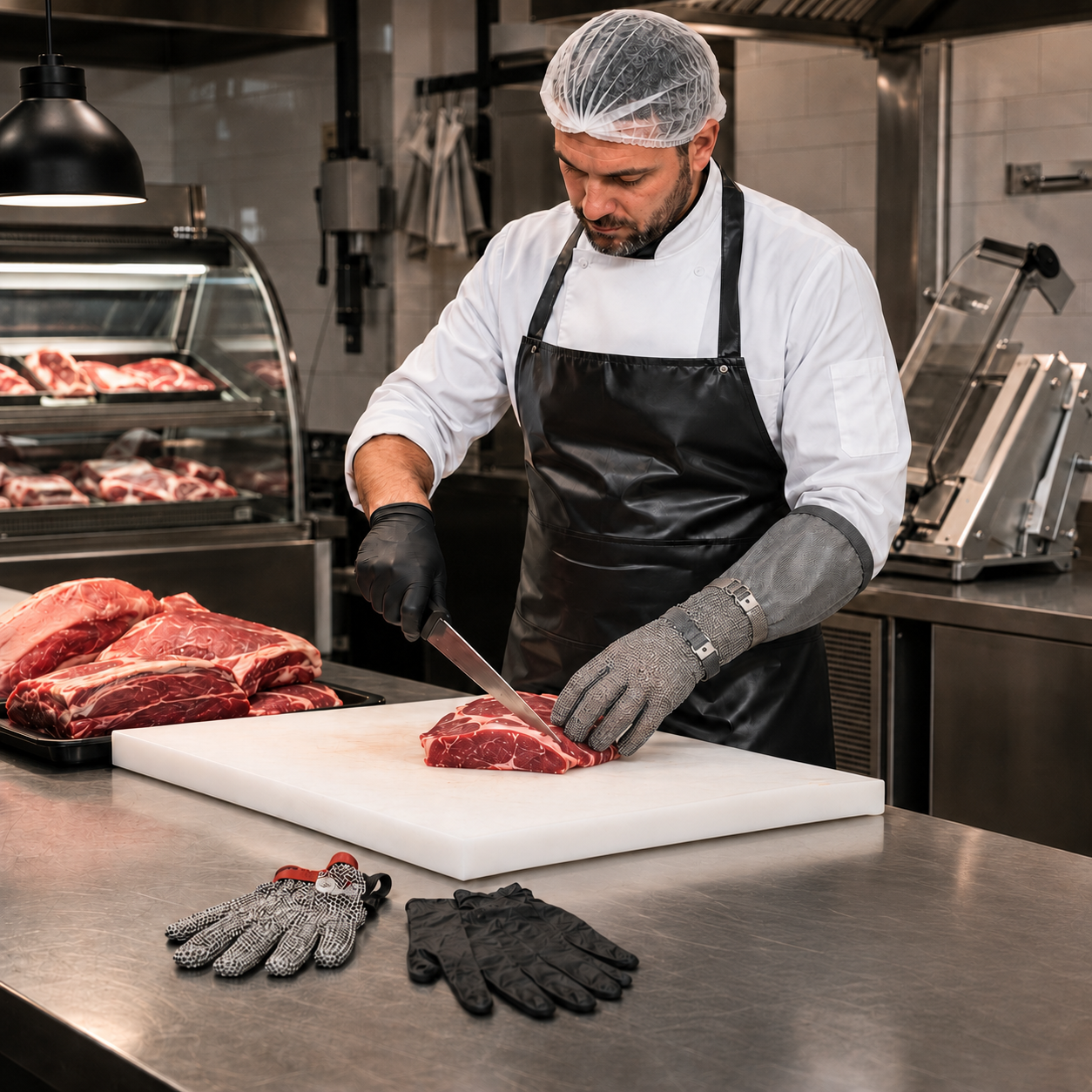
The essential PPE for a butcher is hand protection (cut-resistant or chain mail gloves for cutting, disposable gloves for handling), a food-safe apron, a butcher's coat or jacket, and slip-resistant safety footwear. Chain mail gloves give the highest cut protection for boning and using a bandsaw, while lighter cut-resistant gloves suit everyday tasks. Good PPE protects against cuts, slips and cross-contamination, and helps you meet UK health, safety and food hygiene rules. This guide covers each item, what to look for, and where it matters most.
In this guide
- Hand protection: chain mail and cut-resistant gloves
- Disposable gloves and hygiene
- Aprons and body protection
- Coats and workwear
- Safety footwear
- Hairnets, first aid and the extras
- Frequently asked questions
Hand protection: chain mail and cut-resistant gloves
Hands are most at risk in a butchery, so they get the most protection. There are two main types. Chain mail gloves, made from interlocking stainless steel rings, give the highest level of cut protection and are the right choice for boning, heavy slicing and working near a bandsaw. Cut-resistant gloves, knitted from high-performance fibres, are lighter and more dextrous, which suits everyday cutting and trimming. Many butchers keep both: chain mail for the riskiest jobs, cut-resistant for lighter work.

CE-marked, conforms to EN1082, fits either hand. Pair it with a chainmail sleeve for forearm cover.

A food-grade, 13-gauge cut-resistant glove with a nitrile coating for grip. Light and dextrous for daily trimming and handling.
Disposable gloves and hygiene
For handling product, portioning and serving, disposable gloves keep things hygienic and are changed between tasks to prevent cross-contamination. Nitrile is the usual choice because it is strong, food-safe and avoids the allergy risk of latex; vinyl is a lower-cost option for lighter tasks. Buy by the box and keep several sizes on hand. Browse the range of disposable gloves here.
Aprons and body protection
An apron protects clothing from splashes, blood and contamination, and a wipe-clean, food-safe design is essential for hygiene. A waterproof bib apron is ideal for wet work, while a cotton or polycotton apron suits the shop floor. For the highest-risk cutting, a chain mail apron protects the torso, the same principle as a chain mail glove. Choose easy-clean materials and wash aprons regularly.

A full-coverage, wipe-clean apron for wet work. See the full range of butchers aprons.
Coats and workwear
A clean butcher's coat or jacket presents a professional image and keeps the operation hygienic. Polycotton coats are hard-wearing and easy to launder, while 100% cotton is breathable. Many shops keep several per person so there is always a clean one, and use colour to separate roles or areas.

A durable polycotton coat that launders well and keeps a professional look. Also in navy and black.
Safety footwear
Butchery floors get wet and cold, so slip-resistant safety footwear is essential. Wellingtons with a steel toecap (rated S4 or S5) protect against dropped knives and heavy items while keeping feet dry, and a good non-slip sole reduces the risk of falls. Choose a wipe-clean design that suits cold-room and wash-down conditions.

An S5-rated safety wellington with a steel toecap and midsole, watertight and easy to clean.
Hairnets, first aid and the extras
A few smaller items complete the kit. Hairnets or caps stop loose hair contaminating product and are a hygiene requirement in many shops. Sleeve guards or arm protectors add cover when working with a bandsaw or heavy carcasses. Keep a stocked first aid kit within reach, and wash coats, aprons, gloves and hats regularly so PPE stays hygienic and effective.
For more on the highest-protection option, read our deeper guide to chain mail gloves in butchery. Setting up a shop? See the complete butcher shop equipment checklist. For your legal duties, the HSE food manufacturing guidance is the official source.
Kit out your team safely
From chain mail and cut-resistant gloves to coats, aprons and safety wellingtons, we stock the full range of butcher PPE and workwear, with trade pricing and UK delivery.
Shop PPE & workwear →Frequently asked questions
What PPE do butchers need?
The essentials are hand protection (cut-resistant or chain mail gloves for cutting, disposable gloves for handling), a food-safe apron, a butcher's coat, and slip-resistant safety footwear, plus hairnets and a first aid kit. The exact mix depends on the tasks you do.
Are chain mail or cut-resistant gloves better for butchers?
Chain mail gloves give the highest cut protection and suit boning, heavy slicing and bandsaw work. Cut-resistant knitted gloves are lighter and more dextrous for everyday cutting. Many butchers use both, choosing by task.
What safety boots should a butcher wear?
Slip-resistant wellingtons with a steel toecap, typically rated S4 or S5, which keep feet dry, protect against dropped items and reduce the risk of slips on wet floors.
Why do butchers wear white coats?
A clean coat keeps the operation hygienic and shows dirt and contamination clearly, so it is easy to see when a change is needed. Polycotton coats are popular because they launder well and last.
Is PPE a legal requirement for butchers in the UK?
Employers must assess risks and provide suitable PPE under UK health and safety law, alongside food hygiene duties. Follow the Health and Safety Executive guidance and your food safety management plan to stay compliant.
How often should butcher PPE be replaced or cleaned?
Wash coats, aprons and reusable gloves regularly, replace disposable gloves between tasks, and replace any damaged cut-resistant or chain mail gloves immediately, since worn protection is not safe protection.
Prices correct at the time of writing and may change. Always check current product pages for the latest pricing and availability.


