


To choose the right butcher bandsaw, match four things to your shop: the format (table-top for small to medium shops, floor-standing for high volume), the cutting capacity (the height and depth of product you cut), the motor power (enough to cut frozen and bone-in meat without bogging down), and the build (stainless steel with removable parts for easy cleaning). Also confirm the power supply your premises has, since larger saws are often 3 phase. Budget roughly £3,000 to £16,000 depending on size. This guide explains each factor and compares the models we stock so you can match a saw to your shop with confidence.
In this guide
- Table-top or floor-standing: which do I need?
- What cutting capacity should I look for?
- How much motor power do I need?
- What blade size and type should I use?
- How important is hygiene and easy cleaning?
- What safety features should a bandsaw have?
- Do I need 1 phase or 3 phase?
- How much does a butcher bandsaw cost?
- Frequently asked questions
Table-top or floor-standing: which do I need?
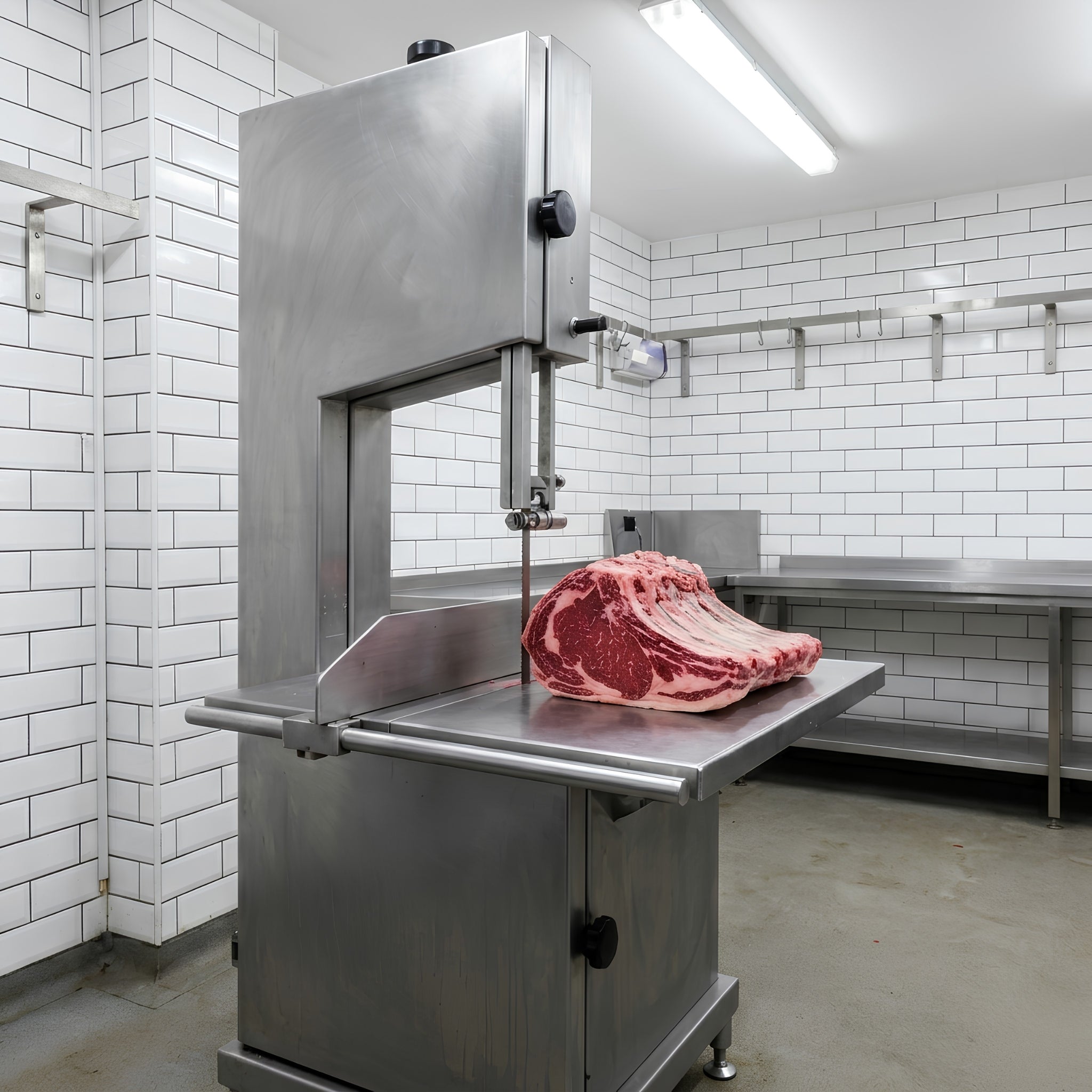
This is the first decision, because it sets your price and your footprint. A table-top bandsaw sits on a bench or stand, takes up little room and costs less, which makes it ideal for a new or small to medium shop cutting everyday joints, chops and steaks. A floor-standing bandsaw is a larger, self-contained machine with greater capacity and a bigger motor, built for high-volume butcheries, supermarkets and processors that cut all day.
If you are opening up or trading at modest volume, start table-top. Move to floor-standing when you are cutting continuously, handling large carcasses, or finding the smaller saw cannot keep up.

One of the most versatile and reliable table-top saws for butcher shops, available in 1 phase and 3 phase.
What cutting capacity should I look for?
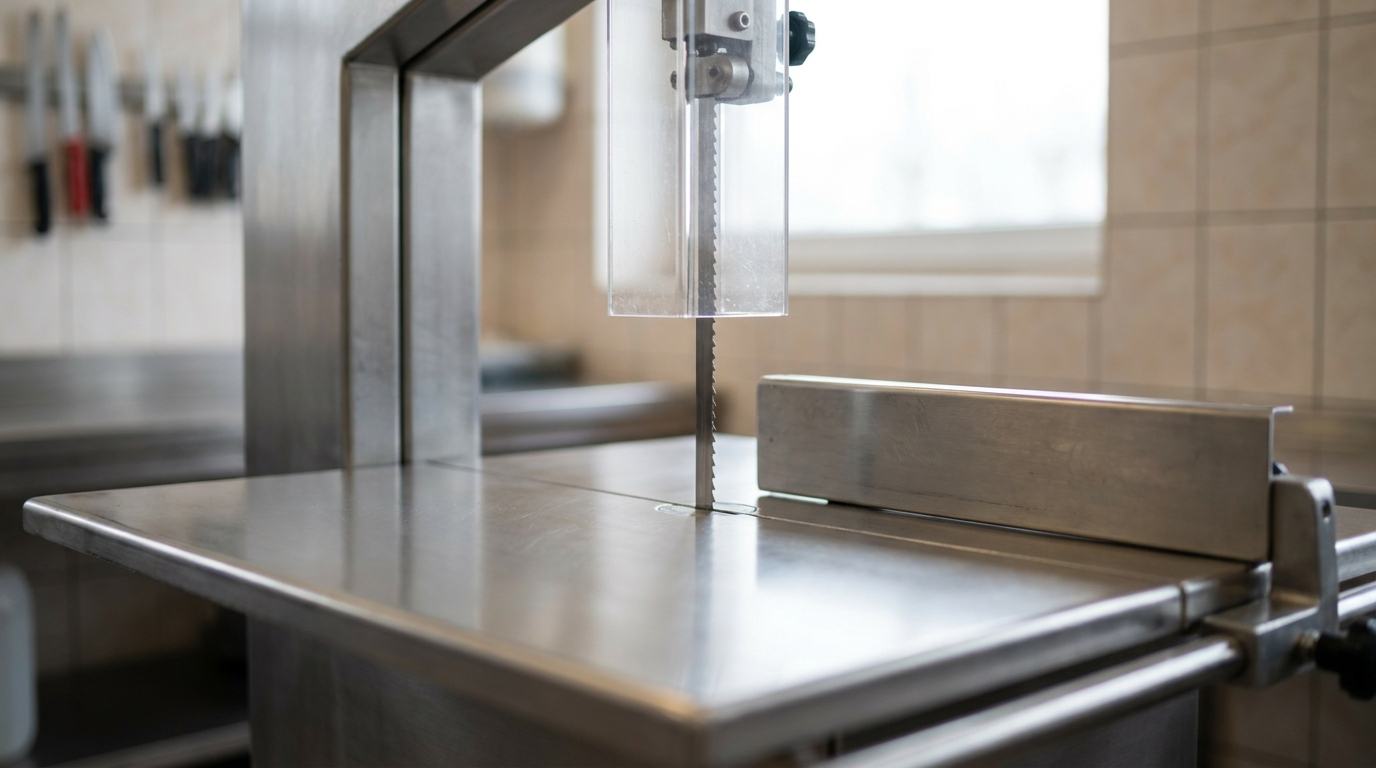
Capacity is set by two measurements: the cutting height (the gap between the table and the upper blade guide, which limits how tall a piece you can cut) and the throat depth (the distance from the blade to the frame, which limits how wide a piece can pass). Picture the largest item you cut regularly, a bone-in leg, a side of lamb, blocks of frozen meat, and make sure the saw clears it comfortably.
Do not just buy the biggest saw available. A larger machine costs more, weighs more and takes more space, so size it to the work you actually do, with a little headroom for the occasional bigger job.
How much motor power do I need?
Motor power decides how easily the saw cuts through bone, sinew and frozen meat without stalling. A small table-top saw is fine for everyday fresh cutting, but if you regularly cut frozen product or heavy bone-in joints, choose a more powerful motor and a sturdier machine. An underpowered saw struggles, overheats and wears its blades faster, which costs you more over time. When you are comparing two saws, the more powerful motor usually wins for a busy shop.
What blade size and type should I use?
Each saw takes a specific blade length, so always match replacement blades to your machine (for example, our 2415mm blade fits saws that take a 95 inch loop). Tooth pitch matters too: a coarser tooth clears meat and bone quickly, while a finer tooth gives a cleaner finish on smaller cuts. Most butchers keep a stock of spare blades on hand, because a blade that snaps or goes blunt mid-shift should never stop you trading.

A reliable replacement blade for professional butchery. Keep a few spare so a worn blade never stops the shift.
How important is hygiene and easy cleaning?
Very. A bandsaw is in constant contact with raw meat, so it must be easy to strip down and sanitise to protect your Food Hygiene Rating. Look for stainless steel construction and removable parts, such as the blade, pulleys, table and scrap tray, that come off without tools for cleaning at the end of each day. Smooth surfaces and few crevices mean fewer places for bacteria to hide. Easy cleaning is not a luxury, it is part of safe daily operation. For the full routine, see our step-by-step guide to cleaning a meat bandsaw.
What safety features should a bandsaw have?
A meat bandsaw is one of the higher-risk machines in a shop, so safety features are essential. Look for a blade guard that adjusts to the cut, a pusher or carriage to keep hands away from the blade, an emergency stop, and a safety switch that prevents the saw restarting unexpectedly after a power cut. Train every operator before they use it, and follow the UK Health and Safety Executive guidance on safe use of food machinery (see HSE food manufacturing guidance).
Do I need 1 phase or 3 phase?
Check this before you buy, because it depends on your premises. Smaller table-top saws are usually available in 1 phase (standard mains), which suits most high-street shops. Larger floor-standing machines are often 3 phase, which many industrial units have but typical retail premises may not. If you are unsure what supply you have, ask your electrician before ordering. Several of our saws, including the ST320 and STL390, come in both 1 phase and 3 phase versions.
How much does a butcher bandsaw cost?
A new butcher bandsaw typically runs from around £3,000 for a table-top model to £16,000 for a large floor-standing machine. The table below compares the MEDOC range we stock, so you can see where each model fits.
| Model | Type | Best for | From (GBP) |
|---|---|---|---|
| MEDOC ST320 | Table-top | Small to medium shops, everyday cutting | £3,247 |
| MEDOC ST320P | Table-top, semi-automatic | Shops wanting more output from a compact saw | £3,578 |
| MEDOC STL390 | Floor-standing | Busy shops and food retailers | £6,867 |
| MEDOC STL480 | Floor-standing, heavy-duty | High-volume butcheries and processors | £10,553 |
| MEDOC STL600 | Floor-standing, large capacity | High-throughput meat processing | £13,147 |

A professional floor-standing saw for shops, supermarkets and processors that cut all day. 1 phase and 3 phase options.
New to setting up a shop? This guide pairs well with our complete butcher shop equipment checklist, which covers everything else you need alongside the bandsaw.
Ready to choose your bandsaw?
Browse the full MEDOC bandsaw range and spare blades, with trade pricing and UK delivery. Not sure which model fits your shop? Our team is happy to advise.
Shop bandsaws →Frequently asked questions
What size bandsaw do I need for a butcher shop?
Match the saw's cutting height and throat depth to the largest items you cut regularly, with a little headroom. A table-top model suits small to medium shops, while a floor-standing saw is better for high-volume cutting of large or bone-in product.
How much does a butcher bandsaw cost in the UK?
Expect roughly £3,000 for a table-top model up to around £16,000 for a large floor-standing machine. Price rises with cutting capacity, motor power and build.
Can a meat bandsaw cut frozen meat and bone?
Yes, provided the motor is powerful enough and you use a suitable blade. For regular frozen or heavy bone-in cutting, choose a more powerful saw, as an underpowered machine will stall and wear blades quickly.
How often should I replace the bandsaw blade?
Replace a blade as soon as it becomes blunt, bent or damaged, since a dull blade is slower and less safe. Keep spare blades in the right length for your saw so you can swap one mid-shift.
Do I need a 3 phase power supply for a butcher bandsaw?
Not always. Many table-top saws run on standard 1 phase mains, while larger floor-standing models are often 3 phase. Check your premises' supply before buying, and choose the matching version where both are offered.
How do I keep a meat bandsaw hygienic?
Choose a stainless steel saw with tool-free removable parts, and strip it down to clean and sanitise at the end of each day. Smooth surfaces with few crevices are easier to keep clean and help protect your Food Hygiene Rating.
Prices correct at the time of writing and may change. Always check current product pages for the latest pricing and availability.


