



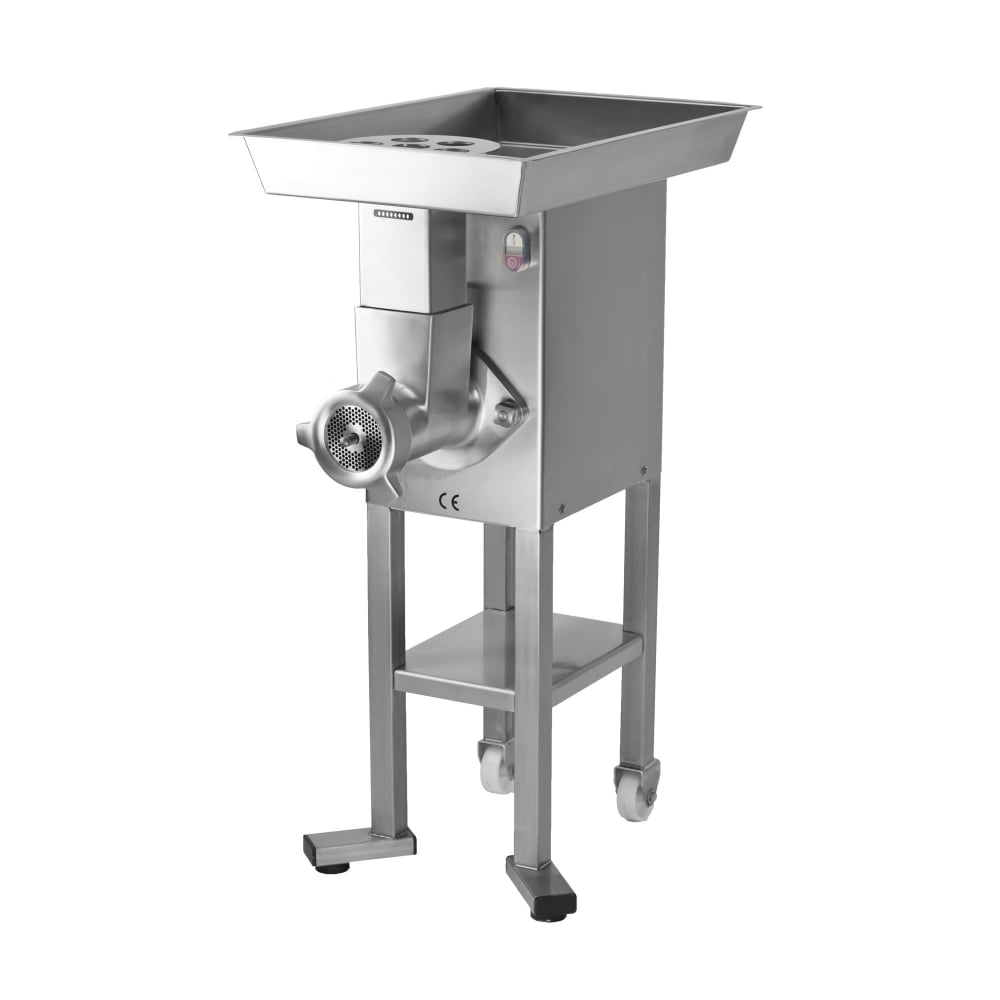
To choose the right meat mincer, match the machine size to your output: a No.12 or No.22 mincer suits small to medium shops, while a No.32 is the workhorse for busy butchers and a No.52 is for high-volume processors. Pick enough motor power to handle the meat you grind without stalling, a stainless steel body with parts that strip down for cleaning, and the correct plate and knife size for your head. Budget roughly £950 for an entry-level table-top mincer up to £8,000 or more for heavy-duty machines. This guide explains the numbers, the plates and the running costs, then compares the mincers we stock.
In this guide
- What do the numbers on a mincer mean?
- What size mincer do I need for my shop?
- Table-top, floor-standing or mixer-grinder?
- How much motor power do I need?
- What plates and knives should I use?
- How important is hygiene and cleaning?
- How much does a meat mincer cost?
- Frequently asked questions
What do the numbers on a mincer mean?
The number on a mincer (No.12, No.22, No.32, No.52) refers to the size of the mincing head and the plate that fits it. The bigger the number, the larger the plate and the higher the throughput. Smaller heads suit lighter, occasional mincing; larger heads move far more meat per minute and stand up to all-day use. Crucially, plates and knives are sized to the head, so a No.32 mincer takes No.32 plates and a No.22 takes No.22 plates. The table below shows where each size fits.
| Head size | Best for | Matching plates |
|---|---|---|
| No.12 | Small to medium shops, everyday mince | No.12 plates |
| No.22 | Medium to high volume, sausage and burger mixes | No.22 plates |
| No.32 | Busy butcher shops, the most popular size | No.32 plates |
| No.52 | High-volume processors and industrial use | No.52 plates |
What size mincer do I need for my shop?
Match the size to how much you mince and how often. A No.12 or No.22 mincer is plenty for a small to medium shop producing fresh mince and the occasional batch of sausages. A No.32 is the standard choice for a busy butcher, fast enough for a Saturday rush without dominating the prep room, which is why it is the most popular size we sell. Step up to a No.52 or a dedicated mixer-grinder only if you are a high-volume processor running large batches all day. When in doubt, size up slightly: a mincer that is comfortably within its capacity runs cooler, lasts longer and is less likely to stall.
Table-top, floor-standing or mixer-grinder?
Most butcher shops use a table-top mincer: compact, easy to clean and ideal for fresh mince, burgers and sausage mixes. A floor-standing mincer offers more capacity for larger operations that need to grind continuously. A mixer-grinder combines mincing with mixing in one machine, which suits processors making seasoned sausage and burger mixes in volume, but it is a significant investment aimed at the larger end of the market. For most shops, a quality table-top No.32 is the sweet spot.

A high-performance No.32 table-top mincer built for the daily demands of a busy butchery, at a price that works for most shops.
How much motor power do I need?
Motor power decides how easily the mincer grinds without bogging down or overheating. A modest motor handles fresh, trimmed meat, but if you grind tougher cuts, sinew or larger volumes, choose a more powerful machine with a robust feed. An underpowered mincer struggles, heats the meat (which is bad for both texture and food safety) and wears faster. As a rule, the busier your shop, the more power and the larger the head you should buy.

A professional-grade No.32 mincer for shops, supermarkets and food service that need reliable, high-output grinding. 1 phase and 3 phase.
What plates and knives should I use?
The plate and knife are what actually cut the meat, and they wear, so they are your main running cost. Always match the plate to your head size (a No.32 mincer takes No.32 plates), then choose the hole size for the texture you want: a fine 3mm plate gives a tight grind for sausages and burgers, while a 4mm to 4.5mm plate suits everyday mince. The plate and knife should be replaced as a pair and kept sharp, because a worn set tears rather than cuts, which heats the meat and shortens shelf life. Keep spares on hand so a dull plate never stops you mid-shift.

Precision-machined No.32 plates in a range of hole sizes. Also available in No.22 and No.12.
How important is hygiene and cleaning?
A mincer handles raw meat all day, so easy cleaning is essential for food safety and your Food Hygiene Rating. Choose a stainless steel machine whose head, worm, plate, knife and tray strip down without tools so you can wash and sanitise them thoroughly at the end of each shift. Smooth surfaces and few crevices give bacteria nowhere to hide. Mincing also warms the meat slightly, so work in batches and keep product cold to stay on the safe side. For the rules on safe food handling, see the Food Standards Agency HACCP guidance.
How much does a meat mincer cost?
A commercial meat mincer typically costs from around £950 for an entry-level table-top model to £8,000 or more for heavy-duty and floor-standing machines, with industrial mixer-grinders running higher still. The table below compares the mincers we stock so you can match one to your shop.
| Model | Type | Best for | From (GBP) |
|---|---|---|---|
| CAS 32 | Table-top, entry-level | Smaller shops on a budget | £950 |
| CAS TK32 | Table-top, commercial | Busy shops wanting value | £1,450 |
| MEDOC TM32 | Table-top, professional | Daily professional use | £2,439 |
| MEDOC TM32/S | Table-top, professional | High-output shops and supermarkets | £2,752 |
| KOLBE TW100 | Heavy-duty | High-volume butcheries and processors | £4,342 |
Fitting out a new shop? This guide works alongside our complete butcher shop equipment checklist and our guide to choosing a butcher bandsaw.
Ready to choose your mincer?
Browse our full range of commercial meat mincers and plates, with trade pricing and UK delivery. Not sure which size suits your shop? Our team is happy to advise.
Shop mincers →Frequently asked questions
What size meat mincer do I need for a butcher shop?
For most butcher shops a No.32 mincer is the standard choice, balancing output and footprint. Smaller No.12 or No.22 mincers suit lower volumes, while No.52 machines are for high-volume processors. Match the size to how much you mince and how often.
What do the numbers on a meat mincer mean?
They refer to the size of the mincing head and the plate that fits it. A higher number means a larger plate and higher throughput, and plates and knives must match the head size, so a No.32 mincer takes No.32 plates.
How much does a commercial meat mincer cost in the UK?
Expect from around £950 for an entry-level table-top mincer up to £8,000 or more for heavy-duty and floor-standing machines, with industrial mixer-grinders costing more again.
What plate size should I use for mince, sausages and burgers?
A fine 3mm plate gives a tight grind for sausages and burgers, while a 4mm to 4.5mm plate suits everyday mince. Choose the hole size for the texture you want, and always match the plate to your mincer's head size.
How do I keep a meat mincer hygienic?
Choose a stainless steel mincer whose head, worm, plate, knife and tray strip down without tools, and wash and sanitise them after each shift. Keep meat cold and work in batches, since mincing warms the product slightly.
How often should I replace mincer plates and knives?
Replace the plate and knife as a matched pair as soon as they go dull, since worn parts tear rather than cut, which heats the meat and shortens shelf life. Keeping spares means a blunt set never stops you mid-shift.
Prices correct at the time of writing and may change. Always check current product pages for the latest pricing and availability.


