



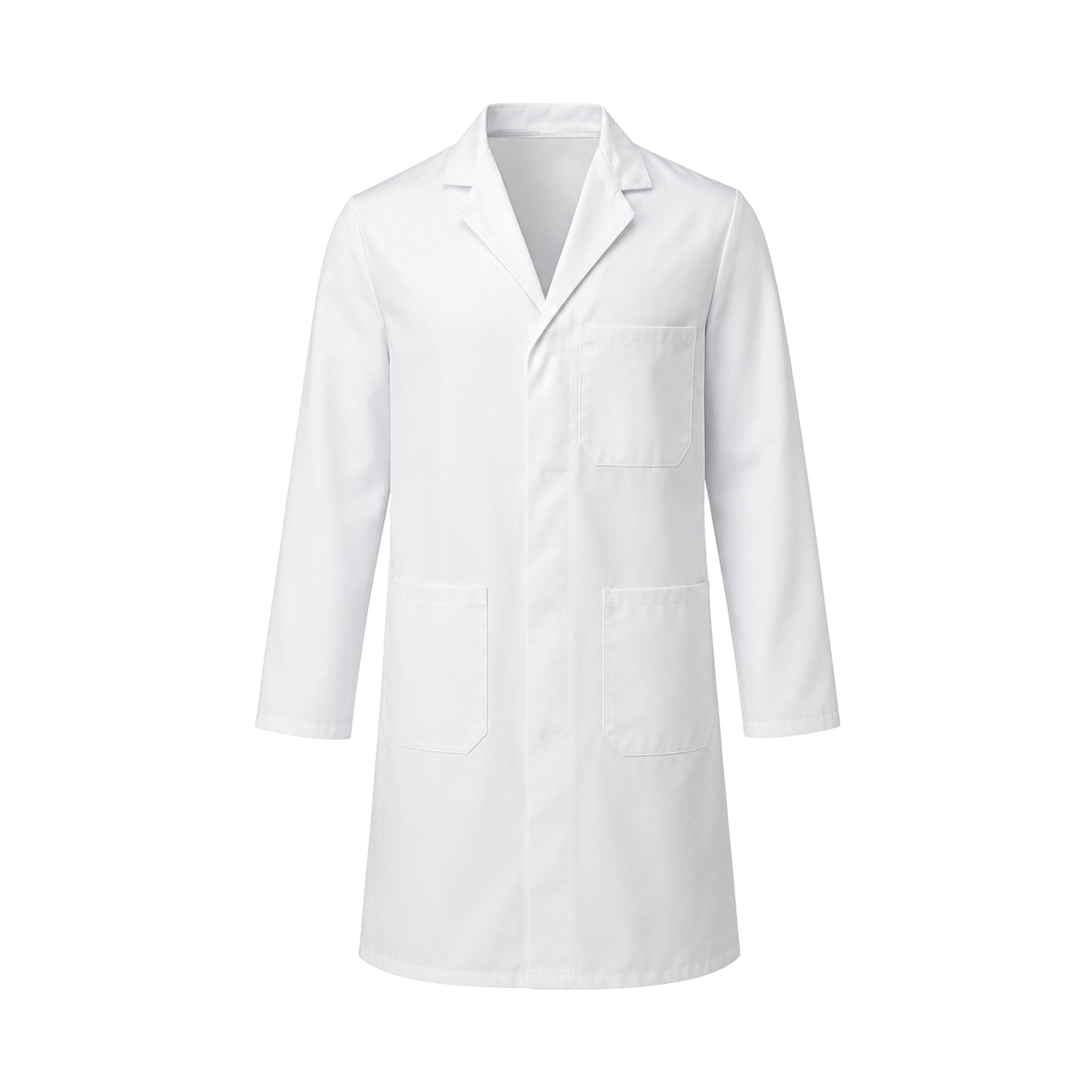
A butcher coat isn't fashion — it's PPE, uniform, and a piece of equipment that has to perform daily under demanding conditions. The right coat lasts years through commercial washing; the wrong one frays at the cuffs within months. Our Premium Butcher Work Coats are built specifically for UK butcher shop and meat processing use. Here's what's in them and why each detail matters.
At a glance
- Fabric: 210g polycotton blend
- Fastening: Concealed studs
- Pockets: Chest pocket + two side pockets
- Ventilation: Back vent
- Sizes: S to XXL
- Colours: White, black, navy blue
Why a butcher coat matters
A butcher coat does five jobs at once:
- Hygiene barrier. Separates the butcher's own clothing from the meat being worked, preventing both contamination of the product and ruining the butcher's clothes.
- PPE. Provides a layer of protection against splashes, knife slips, and minor cuts.
- Uniform. Signals professionalism to customers and conforms to industry expectation.
- Workwear. Pockets for tools, durability for daily wear, designed for the actual tasks of the job.
- Compliance. Required PPE for most commercial meat handling under HSE guidelines.
Why 210g polycotton
Fabric weight is measured in grams per square metre. The 210g spec sits in the sweet spot for butcher coat use:
- Light enough for all-day wear without overheating
- Heavy enough to provide real protection against splashes and knife slips
- Durable enough to survive commercial daily-wash cycles
- Breathable — the cotton component allows airflow that pure polyester doesn't
Lighter fabrics (150-180g) feel less hot but wear out faster and offer less protection. Heavier fabrics (240g+) last longer but get uncomfortable in summer or warm prep areas. 210g is the standard professional spec.
Concealed studs — not buttons
The fastening detail matters more than people realise. Butcher coats use concealed studs for one specific reason: exposed buttons can fall off and end up in product. A button in a sausage or burger is a foreign-object contamination that can shut a shop down. Studs are mechanically attached, concealed beneath a placket so they can't catch on equipment, and they don't pop off in commercial washing.
Cheaper coats with sewn buttons or front zippers are not appropriate for primary food production. Studs are the industry standard for a reason.
The back vent
A back vent is a slit at the lower back of the coat that allows air movement. In a warm prep area or summer trading, this single design feature is the difference between comfortable and exhausted by mid-afternoon. Cheaper coats without this feature trap heat against the body; the back vent vents it.
The pocket arrangement
Three pockets, each with a purpose:
- Chest pocket — pen, notepad, small tools that need to stay accessible
- Side pockets (x2) — larger items, hands when not working, sharpening steel between uses
The chest pocket is positioned high enough not to interfere with apron use; the side pockets are angled for natural hand access.
Colour and use case
Each colour has practical implications:
- White — traditional butcher uniform, signals cleanliness, makes dirt visible (so it gets noticed and cleaned). Standard choice for customer-facing roles.
- Black — modern aesthetic, hides minor staining, suits artisan butcher and dark-fit-out shops.
- Navy blue — between white and black; common for processing and back-of-house roles.
Many shops use white for customer-facing staff and black or navy for back-of-house — a visual cue for customers about who to approach.
Sizing
The size range S to XXL covers most adult body sizes. Butcher coats should fit slightly loose for movement — if in doubt, size up. Tight coats restrict the shoulder movement that knife work requires.
Care and laundering
- Hot wash daily. Standard 60°C wash cycle with commercial detergent.
- Tumble dry or hang dry. The polycotton blend handles both.
- Stain treatment. Blood and fat stains should be pre-treated before washing rather than relying on the wash cycle alone.
- Iron if needed. Not strictly necessary, but a pressed coat looks more professional in customer-facing roles.
- Replace when worn. Watch for fraying cuffs, thinning fabric, or stud failure — once these appear, the coat's useful life is over.
How many coats per worker
The minimum sustainable rotation is two coats per worker — one in use, one in the wash. Three is better and gives you slack for laundry delays. Budget approximately £30-50 per coat at trade pricing; a worker's full coat set costs less than a single day's lost trading.
Verdict
Standard professional spec at sensible commercial pricing. The 210g polycotton, concealed studs, back vent, and three-pocket layout are exactly what a working butcher's coat needs. No frills, no shortcuts — just the right tool for the job.
Browse our butcher coats range or the wider PPE collection for matched aprons, hats, and safety equipment. Contact us for trade pricing on multi-coat orders.


