



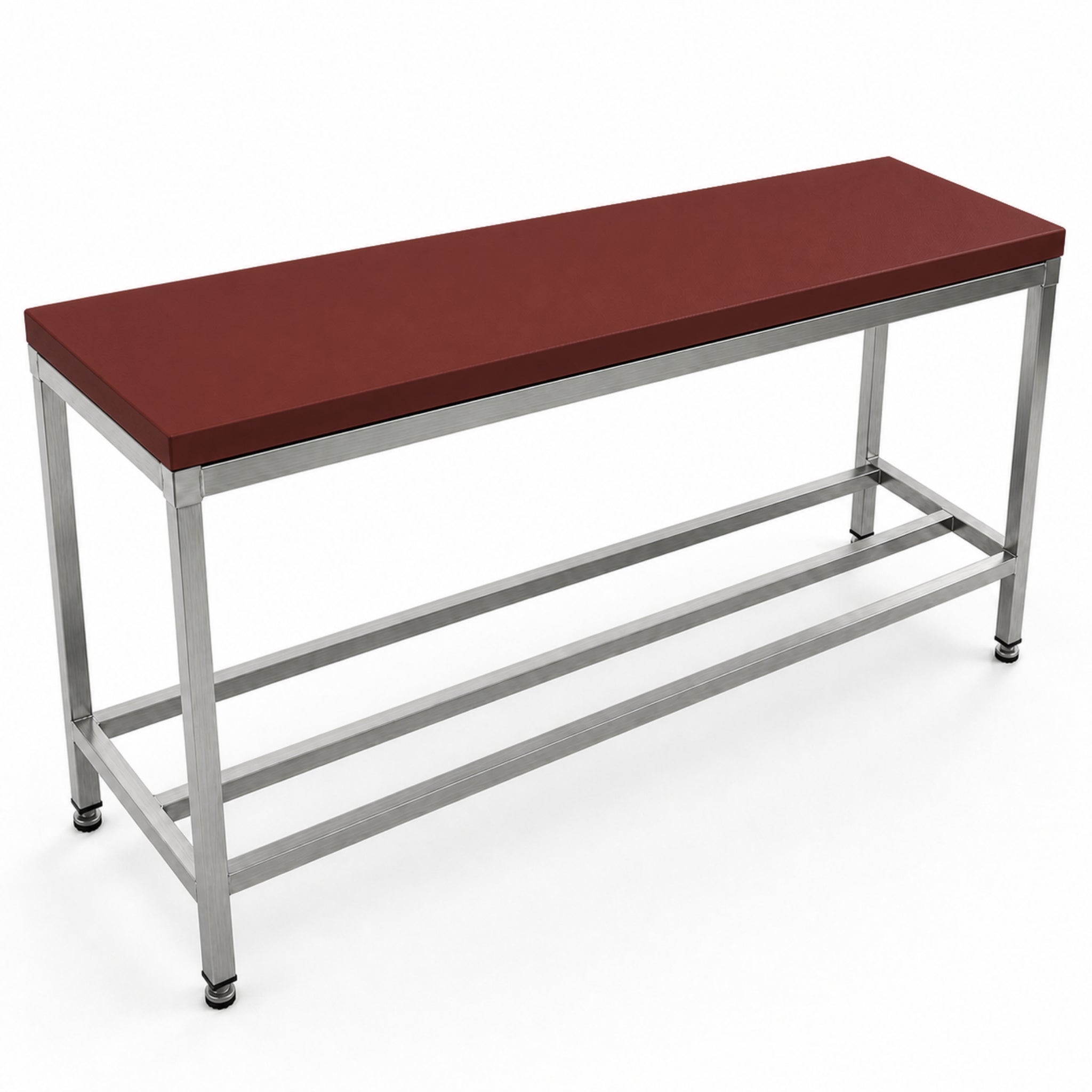
A polytop table is the working heart of any butcher's prep area. It needs to take a beating from cleavers, knives, and bone saws day after day; it needs to be hygienic enough to satisfy any Environmental Health visit; and it needs to last decades, because replacing one is a major operational disruption. Our polytop tables are built specifically for UK butcher shop and meat-processing use. Here's what to know.
What "polytop" actually means
The "poly" refers to the surface material — high-density polyethylene (HDPE), the same food-safe plastic used in commercial chopping boards. HDPE has properties that make it the right choice for a butcher's working surface:
- Non-porous. Doesn't absorb blood, juices, or bacteria.
- Knife-friendly. Slightly softer than wood, harder than rubber. Knives bite cleanly without dulling rapidly.
- Repairable. Heavy scoring can be planed down; the surface restored to flat.
- Food-safe. Approved for direct food contact under UK and EU regulations.
- Easy to clean. Wipes down with standard food-safe sanitiser; no special care required.
At a glance
- Surface: HDPE polytop, food-safe
- Frame and legs: Stainless steel
- Sizes: 2ft × 2ft up to 6ft × 2ft
- Colours: Multiple options to coordinate with shop fit-out
- Use case: Butcher prep, meat processing, fish prep, butchery training
Why stainless steel frames matter
The frame and legs are exposed to the same wet, fatty, repeatedly-washed environment as the surface. Stainless steel:
- Doesn't rust, even with daily wash-downs
- Doesn't bend or fatigue under heavy use
- Doesn't harbour bacteria like painted or coated steel can once the coating chips
- Stays sanitary across years of service
Tables with mild steel or coated frames may cost less initially, but the frame fails long before the polytop wears out — false economy.
Size guide
Choose the size based on the work being done and the space available:
- 2ft × 2ft — small prep station, secondary surface, fish prep
- 3ft × 2ft — standard primary prep table for smaller shops
- 4ft × 2ft — main prep surface for typical butcher shop
- 5ft × 2ft — generous prep for shops handling primal cuts
- 6ft × 2ft — large prep for high-volume work, full primal breakdown
Measure twice. A table that's slightly too large for the space is a daily frustration.
Care and maintenance
- Daily clean. Wipe down with food-safe sanitiser at end of every shift.
- Avoid bleach. Bleach degrades HDPE over time — use proper food-safe sanitisers instead.
- Resurface when needed. Heavy scoring can be planed down; check with us for resurfacing service options.
- Frame wipe-down. Same sanitiser, same frequency — stainless steel benefits from regular cleaning.
- Lifespan. A well-maintained polytop table with HDPE surface and stainless steel frame should last 15-25 years in daily commercial use.
Polytop vs wood block vs stainless steel
Each work surface has its place:
- Polytop (HDPE): Best general-purpose butcher prep. Easy to clean, knife-friendly, food-safe.
- Wood butchers block: Traditional, beautiful, but requires more maintenance and isn't dishwasher-style cleanable. Best for primal breakdown stations.
- Stainless steel work surface: Sterile, hygienic, but blunts knives quickly and is loud to work on. Best for non-cutting tasks (mixing, weighing, packing).
Most established shops use all three in different stations.
Verdict
The right default for a working butcher's prep area. HDPE surface plus stainless steel frame is the standard commercial spec, and the size range covers any operational scale from a small artisan shop to a high-volume processor. Pay once, use for two decades.
Browse our full range or get in touch for sizing advice, custom configurations, or trade pricing on multiple units.


