



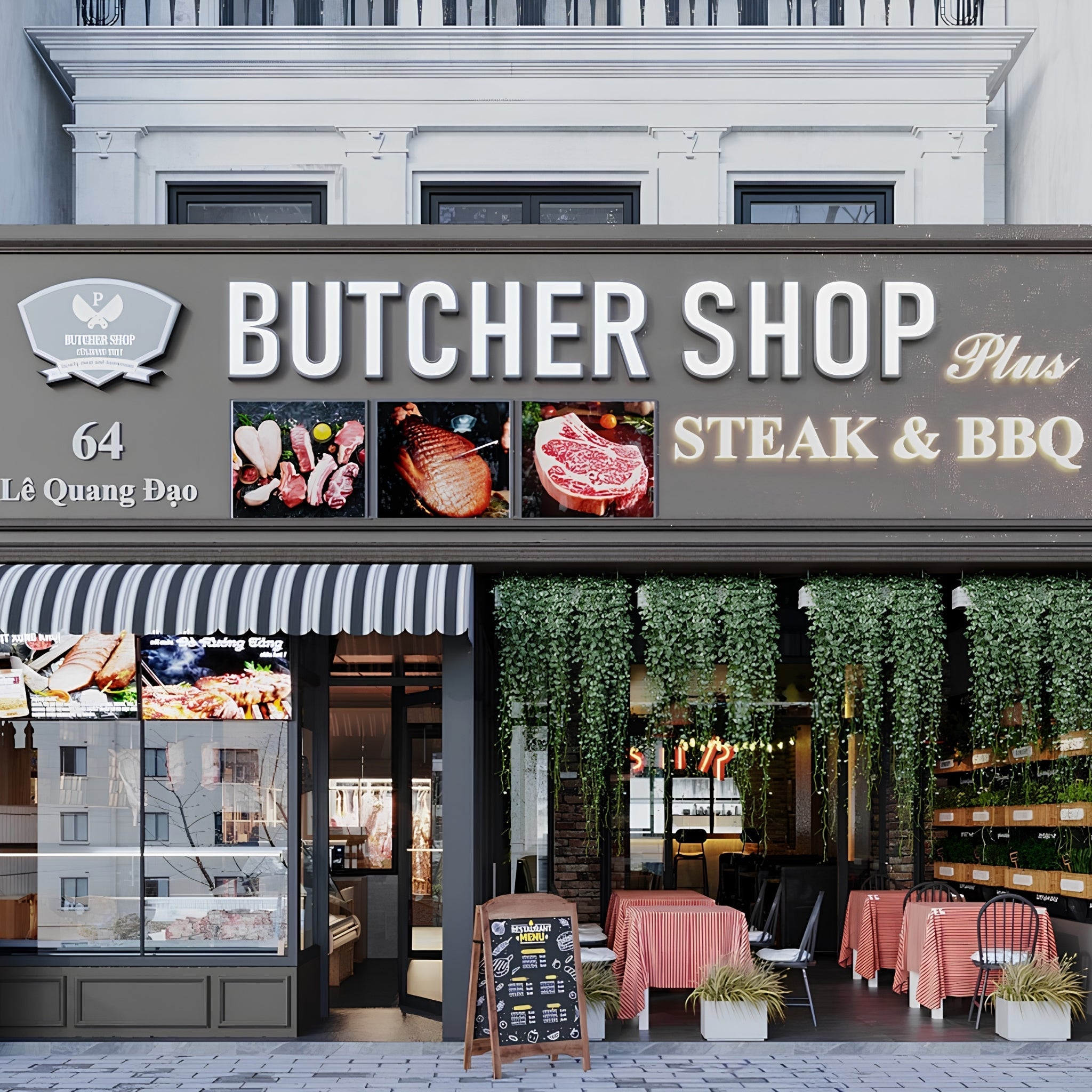
Opening a butcher shop in the UK is a significant undertaking — part trade business, part food production, part retail, all wrapped in tight regulatory requirements. The equipment list alone runs into thousands of pounds, and that's before you've added stock, premises, or staff. This guide covers what you actually need to open and operate, with practical guidance on regulatory requirements and a realistic look at typical startup costs.
We've been supplying UK butcher shops with equipment since 1995. The list below reflects what working butchers actually need, not aspirational lists from non-trade sources.
Before you buy anything: regulatory requirements
Opening a butcher shop in the UK requires:
- Registration with your local authority as a food business, at least 28 days before opening. Free, but mandatory.
- HACCP-compliant food safety management system. The FSA's "Safer Food, Better Business for Retailers" pack is the standard documentation for small food businesses.
- Food hygiene training for at least one person (Level 2 minimum) — typically the shop owner or supervisor.
- Premises compliant with food hygiene regulations — separate prep and customer areas, hand-only washing facilities, adequate refrigeration, vermin-proof storage.
- Approval from the local authority Environmental Health team for the premises (typically a pre-opening visit).
- For some operations: Food Standards Agency approval as a meat establishment if you're processing rather than just retailing.
- Trade Effluent consent from your water company for the higher-strength waste from a butcher shop.
- Business insurance covering public liability, product liability, employer's liability (if you employ staff).
Sort these out before signing a lease. A premises that can't be made compliant is a premises you can't trade from.
Refrigeration: the foundation
Refrigeration accounts for the largest single capital cost when opening a butcher shop and is the most critical to get right. Inadequate refrigeration will fail your hygiene inspection, ruin product, and burn through electricity.
- Walk-in chiller (1-4°C): bulk meat storage. Sized to your trading volume — a small shop might need 2m³, a larger one 6-10m³. Expect £3,000-8,000+ for a commercial walk-in.
- Walk-in freezer (-18°C): long-term storage and sausage/burger production storage. Often smaller than the chiller, perhaps 1-3m³.
- Counter display refrigeration: the customer-facing serve-over counter. Lifeblood of the shop. Sized to your counter length, typically £2,000-6,000 per metre of run.
- Backup or smaller upright refrigerators: typically 2-4 for back-of-house prep and short-term storage.
Daily temperature logs are mandatory — keep a logbook or use a digital monitoring system.
Counter and display
The serve-over display counter is where the business happens. Three main styles:
- Traditional UK butcher counter: refrigerated display with sloped front, tile or stainless steel surrounds, slate or marble shelving inside.
- Continental-style display: often with more glass for visibility, more modern aesthetic.
- Mixed format: serve-over for the main display, with self-service refrigerated cabinets for pre-packed items.
Inside the display, you'll need:
- Food-grade trays in matched sizes — Dalebrook, Plexiline, or Plastic Forte. See our trays range.
- Garnish and dividers to separate products and add visual structure. See our garnish range.
- Price labels and ticket holders compliant with weights and measures regulations.
The knife kit
A working butcher needs a kit, not a single knife. Minimum for one workstation:
- 8" butcher's knife — general purpose. Victorinox Fibrox or F. Dick Pro Dynamic.
- 10" or 12" cimeter/butcher's knife — primal breakdown. Victorinox Swibo or F. Dick equivalent.
- 5-6" boning knife — separating meat from bone.
- Skinning knife if working with carcasses.
- Meat cleaver — splitting bone, primal cuts.
- Paring knife — detail work, trimming.
- Filleting knife if working with fish.
- Sharpening steel — matched to the knife brand (F. Dick steels for F. Dick knives, etc.).
- Whetstone for periodic proper sharpening.
Budget approximately £300-600 for a complete kit from a reputable brand. See our full knives range.
Machinery
The three big machines for a typical UK butcher shop:
Meat mincer
Essential for sausage production, burger production, and ground meat sales. Size to your volume:
- Up to 250 kg/week: benchtop, 22 or 32 hub size, single-phase. Approximately £600-1,500.
- 250-500 kg/week: larger benchtop or small floor-standing. Approximately £1,500-3,000.
- 500+ kg/week: floor-standing or mixer-grinder, often three-phase. Approximately £3,000-8,000+.
See our mincer range and matched blades and plates.
Bandsaw
Essential for cutting through bone. Without a bandsaw, you're restricted to deboned cuts or bringing in pre-portioned bone-in cuts at a premium.
- Standard butcher shop: 400 × 280mm capacity, 1.5-2.2 kW single-phase. Approximately £2,500-5,000.
- High-volume: 500mm+ capacity, three-phase. Approximately £5,000+.
Browse bandsaw blades and spares for ongoing consumables.
Slicer
For cooked meats, deli portions, and cured products. A meat slicer like the Infernus 350mm covers most independent butcher needs at approximately £500-1,200.
Work surfaces
You need at least three working surface types:
- Wooden butcher's block — for primal breakdown and heavy chopping. Italian Black Locust is the premium choice. From £1,500 for a quality 4ft × 2ft block.
- Polytop (HDPE) tables with stainless steel frames — for daily prep, portioning, and general cutting. Approximately £400-1,200 per table depending on size.
- Stainless steel tables — for weighing, packing, and non-cutting tasks. Approximately £200-600 per table.
Don't skimp on work surfaces — they last decades and define the daily working experience.
Weighing scales
Two main types:
- Counter scale for customer-facing sales: weight + price calculation, 40kg maximum, verified for trade use. See our scales range. Approximately £150-400.
- Larger back-of-house scale for receiving and processing weights. Approximately £300-800.
Trade-use scales must be UKCA/UKNI certified and approved — Trading Standards officers do check.
Packaging and consumables
The everyday consumables that need ongoing supply:
- Food wrapping film: 450mm × 1500m, 12 microns standard. See our wrapping film range.
- Tray overwrapper like the Simplicity 45 to seal trays quickly. Approximately £300-600.
- Vacuum packing machine for longer-shelf-life products. Approximately £500-2,500.
- Greaseproof paper, plastic bags, deli paper, butcher's twine — ongoing weekly consumables.
- Price labels and ticket-marking equipment compliant with FIR (Food Information Regulations) labelling.
PPE and uniforms
Per worker:
- 2-3 butcher coats for rotation through the wash. See our butcher coats range.
- 2-3 aprons (cotton or PVC depending on task). See our aprons range.
- Hats or caps for hair restraint. See our hats range.
- Chainmail glove and sleeve for the off-hand. EN1082 rated. See our safety gloves range.
- Cut-resistant gloves for additional protection where needed.
- Slip-resistant footwear — wet floors are the most common injury site after knives.
Budget approximately £100-200 per worker for the full kit. See our complete PPE range.
Till and POS
Three tiers of cash management:
- Cash register like the Sam4s ER-180UL — secure cash drawer with proper sales tracking. Approximately £200-400. No monthly fees.
- Basic EPOS system — integrated card payments, simple stock control. Approximately £500-2,000 plus monthly fees.
- Full EPOS — weight integration, stock control, customer accounts, multi-site. £2,000+ plus higher monthly fees.
For most independent shops opening for the first time, a cash register handles the workload at a fraction of the cost. Upgrade later if needed.
Cleaning equipment
- Food-safe sanitiser approved for direct-contact surfaces
- Heavy-duty degreaser for end-of-day cleaning
- Stiff brushes for tables, blocks, and equipment
- Narrow brushes for cleaning into machinery (mincer, bandsaw)
- Mops and buckets for floor cleaning
- Hot water access — hand-only sink separate from food prep sinks
- Industrial roll holders for blue roll paper towels
- Waste handling — dedicated bins for offal and meat waste with daily collection
Storage
- Meat hooks for hanging cuts in the chiller — stainless steel, food-safe
- Stainless steel shelving for dry goods and consumables
- Spice and seasoning storage — sealed containers, labelled with use-by dates
Optional / specialist equipment
Depending on your specialism:
- Sausage filler / linker if making your own sausages
- Brine injector and curing equipment if making cured products
- Smoker if smoking your own products
- Burger press / former if doing high volumes of burgers
- Tenderiser / cuber for cubed steak production
- Fly zapper for hygiene compliance. See our fly zapper range.
Indicative total budget
Realistic startup cost ranges for equipment and fit-out (excluding premises and stock):
- Small artisan shop (lean): £25,000-40,000
- Standard independent butcher: £40,000-80,000
- Larger shop with full processing: £80,000-150,000+
These numbers don't include the premises (lease, fit-out, signage, plumbing/electrical), stock, working capital for the first 3-6 months, marketing, or staff costs. The total opening cost typically runs 2-3x the equipment cost.
Where to buy
Source equipment from established UK trade suppliers with parts availability and service support — not generic auction sites or imported direct from manufacturer without UK representation. When equipment fails (which it will), you need access to spares within 48 hours. We supply across the major commercial brands and stock consumables for ongoing supply.
The first six months
A few things working butchers always wish they'd known on day one:
- Buy good knives once. The cheap kit costs more over its life than a quality kit. Start with F. Dick or Victorinox.
- Refrigeration spec matters more than counter aesthetics. Customers come back for fresh meat, not pretty tiles.
- Daily cleaning routines beat occasional deep cleans. Get the cleaning discipline right from week one.
- Don't undercapitalise on consumables. Running out of wrapping film mid-day, twice, costs more than a year's worth of spares.
- Build supplier relationships. A trade supplier who knows your business and will hold spares for you is worth more than the cheapest line price.
How we can help
M&S Butcher Equipment has been supplying UK butcher shops since 1995. We work with new shops opening regularly — from artisan one-person operations to multi-site processors — and can advise on equipment selection, supplier relationships, and ongoing spares supply.
Get in touch for a startup equipment consultation, trade pricing on full equipment packages, or advice on any specific element of your shop fit-out.


