



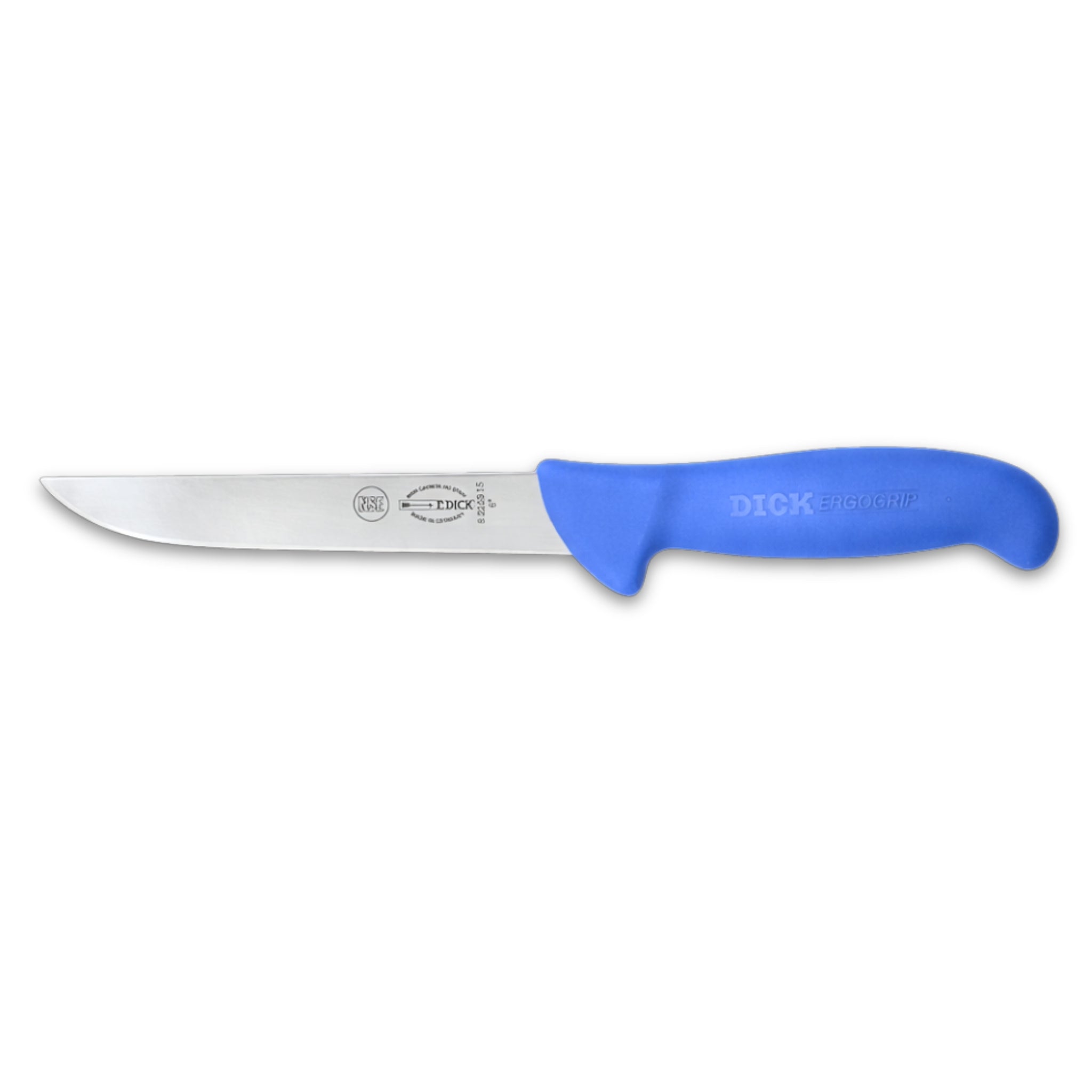
If you walk into ten established butcher shops across the UK and Europe, you'll find F. Dick knives in most of them. The brand has been the German butcher's standard for over two centuries, and there are concrete reasons why working butchers reach for the F. Dick label when they could choose anything. This is what those reasons are — not marketing, just the practical case.
Two-and-a-half centuries of knifemaking
F. Dick (formally Friedr. Dick GmbH & Co. KG) has been forging knives in Esslingen, Germany since 1778. That's not a marketing claim — they're the oldest specialist knife manufacturer in continuous operation in Germany. Two and a half centuries of refining steel composition, blade geometry, and handle design produces knives that solve problems most users don't even know they have.
Steel and edge retention
F. Dick uses proprietary stainless steel formulations specifically chosen for the cutting profile of meat and bone work. Two practical implications:
- Long edge retention. A well-maintained F. Dick blade can go 2–3 weeks between proper sharpening sessions in commercial use, versus 5–7 days for cheaper alternatives.
- Resharpening doesn't kill the blade. Some hard steels resist dulling but are difficult to resharpen; others sharpen easily but lose the edge quickly. F. Dick's steels strike a balance that suits working butchers.
Handle ergonomics
A butcher works knives for 6–8 hours a day. Handle comfort isn't a luxury — it's the difference between a productive day and tendinitis. F. Dick's handles are designed around the way a hand actually grips a knife under load: contoured polymer for the Pro Dynamic and Master Grip lines, traditional shaped wood for the 1905 and Premier Plus ranges. The grip stays positive even with wet, fatty hands.
Range and specialisation
F. Dick makes knives for tasks most generic kitchen brands don't even acknowledge:
- Cimeter knives for primal breakdown
- Scimitar knives for trimming and slicing large cuts
- Specialist boning knives (curved, semi-flexible, narrow, wide)
- Sticking knives for slaughter
- Skinning knives
- Cleavers with specific weight distributions
For each task, F. Dick has a knife specifically designed for it rather than a general-purpose tool you're hoping will work. Browse the full range in our F. Dick collection.
Resharpening and longevity
A well-cared-for F. Dick knife in daily commercial butcher shop use lasts 5–10 years before needing replacement. The brand also produces matched F. Dick sharpening steels designed specifically for their blade angles — using the matched steel maintains the original blade geometry rather than gradually changing it.
The trade-off
F. Dick knives cost more than generic alternatives. A 10" F. Dick butcher's knife is roughly 2–3x the price of an unbranded equivalent. The case for the higher price comes down to:
- Edge retention reducing sharpening time
- Longer working life before replacement
- Handle ergonomics reducing fatigue and injury
- Specialised designs for specialised tasks
For a working butcher using knives daily as a profession, the per-year cost ends up similar to cheap knives because the F. Dick lasts so much longer. For occasional or light use, the case is weaker.
Other strong brands
F. Dick isn't the only option. Victorinox (Swiss) is the most direct competitor and equally well-regarded; Ambrogio Sanelli (Italian) is excellent for fine work; Eicker (German) and Sabatier (French) are also reputable choices depending on regional tradition and personal preference. The best knife is the one that fits your hand and matches your work — F. Dick is one of a small handful of brands that consistently delivers that across the full range of butcher's tools.
Explore our F. Dick collection or the broader full knives range.


