



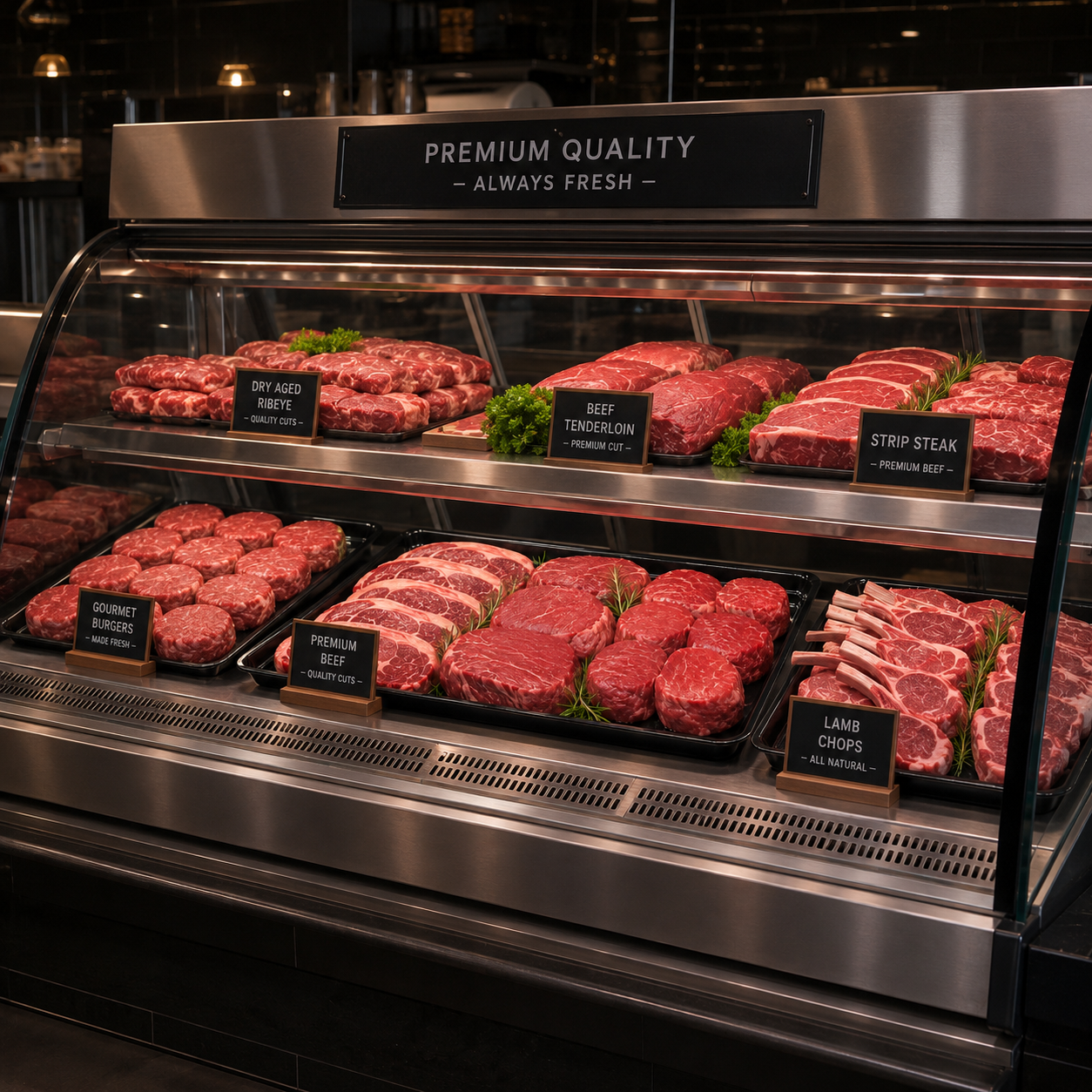
Food-grade trays are the unglamorous workhorse of a butcher's display. They keep raw meat off the counter surface, prevent cross-contamination, comply with FSA regulations, and — done right — make the display look properly professional. This guide covers what to look for, what the regulations actually require, and where each type fits.
What "food-grade" actually means
A food-grade tray is one made from materials that can safely come into direct contact with food. In the UK, this is regulated by the Food Standards Agency (FSA) and the Materials and Articles in Contact with Food (England) Regulations. The relevant standards cover what the tray is made of, what additives or migratory chemicals are permitted, and how it must be labelled.
In practice, that means trays manufactured from approved plastics (PP, PET, ABS), stainless steel, or food-safe melamines — not just any plastic that happens to be the right shape.
Why food-grade trays matter for a butcher shop
- Cross-contamination prevention. Meat juices stay contained to the tray, not the counter or surrounding products.
- Compliance. Environmental Health inspectors look at display equipment as part of any audit. Non-food-grade containers are a fast track to a poor hygiene rating.
- Hygiene management. Food-grade trays are designed to survive repeated washing at high temperatures without degrading or absorbing odours.
- Presentation. A clean, well-designed tray makes products look more appealing and commands better prices.
- Durability. Quality trays last years in daily commercial use — cheap alternatives crack within months.
Tray styles for different display needs
The right tray depends on what you're displaying and the look you want:
- Dalebrook trays — classic UK butcher counter styling in melamine, designed to look like ceramic without the weight or breakage risk. Available in white, black, and slate finishes. Strong default for traditional display.
- Plexiline trays — clear acrylic for a contemporary, premium look that lets the product be the star. Particularly effective for fish counters and high-end cuts.
- Plastic Forte trays — straightforward, robust polypropylene trays for back-of-house and value-tier displays.
Browse the full range in our trays collection.
What to check before buying
- Material certification. Reputable suppliers will confirm the tray is food-contact compliant. If you can't get a straight answer, walk away.
- Temperature tolerance. Display fridges run at 1–4°C; the tray needs to perform at that temperature without warping or cracking.
- Dishwasher safe. Daily commercial washing is the standard. Hand-wash-only trays cost you labour.
- Dimensions. Measure your display before ordering — trays that don't fit the cabinet are a familiar mistake.
Care and lifespan
With proper care, quality food-grade trays should last 3–5 years in daily commercial use. Wash daily, avoid abrasive scourers that scratch the surface (scratches harbour bacteria), and replace any tray that develops cracks or deep scoring.
Browse our food-grade trays collection for the full range, or contact us for advice on what suits your display.


